
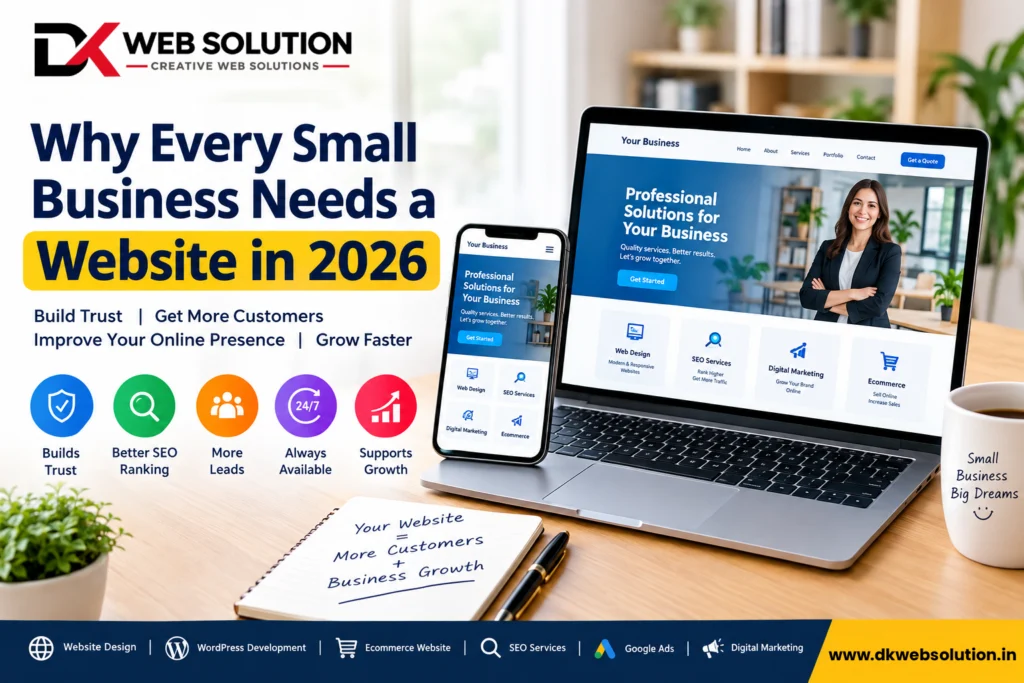
Running a small business in 2026 is not just about offering good products or services. Customers also want to find your business online, learn about your services, compare prices, read reviews, and contact you without any difficulty. This is why business website design has become an important part of building a successful business.
Thank you for reading this post, don't forget to subscribe!Whether you run a local shop, a service-based company, a startup, a consultancy, or an online store, a professional website can help you reach more customers and build trust in your brand. A website gives potential customers a place to learn about your business, understand what makes you different, and take the next step toward making a purchase.
Social media platforms and online business listings are useful, but they cannot replace having your own website. Your website gives you greater control over your content, brand identity, customer experience, and online marketing strategy.
In this guide, we will explain why every small business needs a professional website in 2026 and how the right website can support long-term business growth.
1. Your Website Builds Trust with Potential Customers
When people hear about a business, one of the first things they often do is search for it online. They want to know whether the company is genuine, what services it offers, and how they can contact it.
If your business does not have a website, some potential customers may find it difficult to get the information they need. A professional website helps establish your business as a credible and reliable option.
A well-designed website should include:
- A clear homepage explaining your business.
- Detailed information about your products and services.
- Your business contact details and location, where applicable.
- Customer testimonials or genuine reviews.
- A professional About Us page.
- Clear calls to action, such as Call Now, Get a Quote, or Contact Us.
Good business website design makes this information easy to find. When visitors can understand your business without confusion, they are more likely to consider your products or services.
2. Help Customers Find Your Business on Google
Having a website creates opportunities for your business to appear in relevant search results. When potential customers search for services related to your industry, your website can attract visitors who are already interested in what you offer.
For example, a web design company in Chandigarh may want to appear for searches such as “website designer in Chandigarh,” “business website design,” or “affordable website development services.”
Similarly, a local flooring store, beauty salon, restaurant, or home service provider can create pages targeting its products, services, and service areas.
To improve your website’s search visibility, focus on:
- Search engine optimisation (SEO).
- Relevant keywords and helpful content.
- Fast loading speeds and mobile usability.
- Descriptive page titles and meta descriptions.
- Internal links between related pages.
- A clear website structure.
- Accurate business information.
SEO takes time, and rankings are never guaranteed. However, a properly structured website gives your business a foundation for building organic traffic and attracting relevant customers over time.
3. Reach More Customers Beyond Your Local Area
A physical shop usually serves customers within a particular geographical area. A website can help you reach people in other cities, regions, and countries, depending on the products or services you provide.
For example, a consultant can offer services to clients across India, while an online store can accept orders from customers in different locations. A digital marketing agency can use its website to generate enquiries from businesses that need SEO, website development, or online advertising.
Even if you operate a local business, your website can help nearby customers discover your services before visiting your premises.
You can create dedicated service pages, location pages, product categories, and informative blog posts to help different audiences find relevant information.
The right website strategy depends on your business model, target audience, delivery capabilities, and marketing goals.
4. Make Your Business Available 24/7
Your business may have fixed opening hours, but your website can continue providing information when your office or shop is closed.
Customers can visit your website at a convenient time to learn about your services, explore products, read frequently asked questions, or submit an enquiry.
For service-based businesses, an enquiry form can collect customer details even outside working hours. For ecommerce businesses, an online store can allow customers to browse products and place orders whenever the store is available online.
Useful website features include:
- Online enquiry and contact forms.
- Product catalogues and service descriptions.
- Appointment booking options.
- Frequently asked questions.
- WhatsApp contact links.
- Online payments and checkout, where required.
These features can make it easier for customers to interact with your business and reduce the need to answer the same basic questions repeatedly.
5. Generate More Leads and Business Enquiries
A website should do more than display information. It should guide visitors toward taking a useful action.
Depending on your business, that action could be requesting a quote, booking a consultation, scheduling an appointment, calling your team, or purchasing a product.
A website designed around customer needs can help turn relevant visitors into potential leads.
For better lead generation, include clear calls to action throughout your website. For example, a web development company could use “Get a Free Consultation,” while a home renovation business might use “Request a Project Estimate.”
Keep your forms simple and ask only for the information you need. Make phone numbers, email addresses, and other contact options easy to find.
You can also measure which pages attract visitors and which marketing channels generate enquiries. This information helps you improve your website and make better marketing decisions.
Remember that website traffic alone does not guarantee sales. Your content, pricing, service quality, customer experience, and follow-up process also matter.
6. Promote Your Brand with a Professional Online Identity
Your website is an important part of your brand identity. It gives you a place to present your business consistently and explain why customers should choose you.
A professional website should reflect your business through its logo, colours, typography, images, messaging, and page layout.
For example, a premium beauty salon may prefer an elegant design with attractive service photography, while a technology company may benefit from a clean layout that highlights its expertise and solutions.
Your website should also communicate your unique selling points. These may include years of experience, specialised services, product quality, transparent pricing, customer support, or a convenient booking process.
Consistent branding across your website, Google Business Profile, social media pages, and other marketing channels helps customers recognise your business.
7. Improve the Mobile Experience for Customers
Many customers browse websites using smartphones. If your website is difficult to use on a small screen, visitors may leave before contacting you or completing a purchase.
Responsive business website design ensures that your website adapts to different screen sizes, including mobile phones, tablets, laptops, and desktop computers.
A mobile-friendly website should have:
- Readable text without unnecessary zooming.
- Buttons that are easy to tap.
- Simple navigation menus.
- Images that fit the screen properly.
- Fast-loading pages.
- Easy-to-use contact forms.
- Convenient access to phone and WhatsApp links.
Mobile usability also supports your overall SEO strategy. While no single design feature guarantees better rankings, a good mobile experience can make your website more useful to visitors.
Test your website on different devices before launching it. A website that looks attractive on a desktop should also work smoothly for someone browsing on a smartphone.
8. Support Your SEO and Digital Marketing Campaigns
A website provides a central destination for your online marketing activities. You can direct visitors from Google Ads, social media campaigns, email marketing, business directories, and other channels to relevant pages on your website.
For example, if you advertise website development services, you can send potential customers to a dedicated landing page explaining your packages, process, benefits, and contact options.
This is often more effective than sending every visitor to a general homepage that does not match their search or advertisement.
A strong digital marketing strategy may combine:
- Search engine optimisation to attract organic traffic.
- Google Ads to reach people searching for relevant services.
- Social media marketing to build awareness and engagement.
- Content marketing to answer customer questions.
- Email marketing to maintain relationships with interested customers.
- Conversion tracking to understand campaign performance.
A properly configured website can help you measure enquiries, purchases, and other meaningful actions. This makes it easier to evaluate your marketing efforts and identify opportunities for improvement.
9. Compete with Larger Businesses
Small businesses do not always have the marketing budgets of large companies. However, a well-planned website can help a smaller business present its services professionally and reach a specific audience.
You do not need hundreds of pages or complicated animations to make a good impression. A clear, fast, useful website can be more valuable than an expensive design that confuses visitors.
Focus on the customers you want to attract. Explain your services clearly, answer common questions, showcase genuine work, and make it easy for people to contact you.
Local businesses can also develop useful location-specific content and maintain an accurate Google Business Profile to improve their online presence.
The goal is not to copy large competitors. It is to show customers why your business is a suitable choice for their particular needs.
10. Choose the Right Website for Your Business
Not every small business needs the same type of website. The right solution depends on your goals, budget, products, services, and future plans.
Here are some common options:
Business website: Suitable for companies that need to introduce their brand, explain services, and generate enquiries.
WordPress website: A flexible option for service businesses, blogs, company websites, and many content-focused projects.
Ecommerce website: Designed for businesses that want to sell products online, manage orders, and accept payments.
Portfolio website: Useful for designers, photographers, developers, consultants, and creative professionals who want to showcase their work.
Booking website: Suitable for salons, consultants, clinics, and other businesses that accept appointments.
Custom website: Appropriate when a business needs specialised features, integrations, or workflows that standard website platforms cannot easily provide.
Before selecting a solution, consider the initial development cost, hosting, domain renewal, maintenance, security, content updates, and future expansion.
A professional website should meet your current needs while leaving room for your business to grow.
11. Website Security and Regular Maintenance Matter
Launching a website is only the beginning. Regular maintenance helps keep it secure, functional, and up to date.
Outdated software, weak passwords, missing backups, and poorly configured plugins can create security and performance problems.
Small businesses should consider:
- Keeping the website platform and plugins updated.
- Using HTTPS with a valid SSL certificate.
- Maintaining regular backups.
- Using strong passwords and appropriate access controls.
- Monitoring website speed and broken links.
- Testing contact forms and checkout processes.
- Updating outdated service and contact information.
If your website collects customer information or accepts payments, take appropriate steps to protect that information and follow applicable privacy and payment requirements.
You can manage these tasks yourself if you have the necessary knowledge, or work with a website maintenance provider to keep everything running smoothly.
12. How Much Does Business Website Design Cost in 2026?
The cost of business website design varies according to the type of website, number of pages, design requirements, functionality, content needs, and development platform.
A basic business website generally costs less than a custom ecommerce platform or a website with advanced booking and payment integrations.
When comparing website design packages, check what is included. Some providers offer domain registration, hosting, responsive design, contact forms, and basic on-page SEO, while other services may cost extra.
Before hiring a developer, ask for a clear proposal covering:
- Website pages and features.
- Design and development scope.
- Mobile responsiveness.
- SEO setup and content requirements.
- Domain and hosting arrangements.
- Maintenance and support.
- Delivery timeline and payment terms.
Avoid choosing a provider based on price alone. A well-planned website can be a valuable business asset when it is designed around your customers and maintained properly.
Final Thoughts
In 2026, a professional website is an important investment for small businesses that want to strengthen their online presence, reach potential customers, and support long-term growth.
It helps people learn about your business, discover your services through search engines, contact your team, and make informed purchasing decisions. It also provides a central platform for SEO, Google Ads, social media marketing, and other promotional activities.
The best website is not necessarily the biggest or most expensive. It is the one that communicates your value clearly, works well on mobile devices, provides a positive customer experience, and supports your business goals.
If you have not created a website yet, now is a good time to plan one. If you already have a website, review its design, speed, content, mobile usability, and lead generation features to identify areas for improvement.
Need Professional Business Website Design?
DK Web Solution helps businesses build their online presence with professional website design, WordPress development, ecommerce website development, search engine optimisation (SEO), Google Ads, and digital marketing services.
Whether you are starting a new business or improving an existing website, the right online strategy can help you present your services professionally and connect with your target audience.
Visit https://dkwebsolution.com/ to explore website design and digital marketing services for your business.
Build your online presence with DK Web Solution and give your business a professional place to grow.
